Tuesday, August 03, 2010

On Fruit

Louis XIV cultivated thirty-three varieties of peach in the gardens of Versailles – some say that they were his favourite fruit.
PĂȘches des vignes are really quite rare these days in France. They grow in between the vines in a vineyard and are thought to be less beautiful to look at than the rosier looking, fleshier and more robust Chinese peach varieties. Their flavour is remarkably delicate, however, and their soft flesh goes beautifully with wild blackcurrants, sieved into a thick, sharp coulis.
Sometimes, things are not quite what they seem. The discarded hold a hidden, exciting secret known only to those who take the trouble to discover it.

Somewhere Islands

Jutting out into the bay off the northern coast of Brittany is the Ile de BrĂ©hat. It’s hardly one island at all, more a ragged archipelago of spits of rock – treacherous for sailors – with two inhabited like conjoined twins. No cars are allowed, the pedestrian roadways  are sparsely peopled by cyclists – the silence is deafening – raucous seabirds fracture the peace while dark cormorants sit broodingly on the rocks. This is Celtic country – the missionaries arrived here before taming the wild Irish a few hundred kilometres north. The landscape is harsh but forgiving – a gentle microclimate where in summer agapanthus usually native to South Africa grows wild and rhododendrons bloom in supreme, luxurious abundance. The land yields its fruit, wild plums, figs and herbs can be picked as they ripen beside the pathways. The houses are sturdily built of pink and grey granite – some with walls over two feet thick -  standing stubbornly for three hundred years or more against the wild weather from the sea. The western sun catches the pink-tinged walls  as it falls below the horizon, its last traces illuminating sailboats heading for home in the  evening light.
I am the guest of a child psychiatrist and autism expert and his Czech wife, calm as a Madonna, with sundry relatives and children who are numerous but strangely effacing – their presence hardly ruffles one’s concentration. The public boat travels to the mainland a few times a day to scoop up tourists, chattering like starlings; I arrived too late so my passage was an exhilarating fifteen minute ride at dusk in my host’s speedboat. Eschewing the delights – excellent as they undoubtedly might be – of the small but well-stocked supermarket in the tourist south of the island, our host puts dinner on the table the old-fashioned way, with rod and line, so tonight we have Brittany oysters, sea bass , lobster and barbecued octopus. However shall  I bear it.
The French either go on holiday for all of July or all of August and changeover day is usually like the seventh circle of hell. Traffic, however, was kind enough to allow a stopover at Mont St Michel, which has been a place of pilgrimage in adoration of the archangel and field commander of the heavenly host, not least because it resisted all English attempts to conquer it during the Hundred Years War, for which, no doubt, the perfidious Papists were grateful for centuries afterwards, believing the English with their superior firepower to be the devil incarnate. Some still do, I imagine. The image is of the 'other' St Michael's, Coventry Cathedral, where my young voice once soared in the chancel and Epstein's masterpiece tramples Beelzebub underfoot. Nice.

Friday, July 23, 2010

Why I don't Want to Live in Britain

I rather think that I have to – with some reluctance – describe myself as ‘antimulticultural’. Travelling the world as a fly on the wall allows exposure to a number of different cultural identities. Here in France, the sense of identity is firm and well-developed but in Britain, this is far less in evidence. Having been born and brought up there, one reason why I left was that I had less and less idea what it meant to be ‘British’ any more. Multiculturalism is a moral vacuum, and “into a moral vacuum always bad things creep.” Of course, I felt guilty, because pluralism or multiracial societies seem to me to be good and desirable things – learning from others, and so on - but a multicultural society where group differences are actually encouraged, especially when such differences are in moral, spiritual or even legal conflict, seems to me to be a very bad thing. It leads to a defensive, ghetto mentality which, if threatened, spills over into antisocial behaviour, or worse, defence of the prevalent mentality in the ghetto which spawned it. According to Douglas Murray, Director of the Centre for Social Cohesion, a London-based think tank, the problem is “that the British government has pushed young Muslims into becoming young Muslims when it should have pushed them into becoming young Brits. In other words, the direction of travel it sent them in has been deeply backward.”
British Muslims might ask ‘You tell me to integrate, but what are we integrating into? What is Britain, what are British values?’ It’s very hard to tell people to integrate if you don’t tell them what they are integrating into. It’s very hard to tell them to be British if they don’t know and you don’t know what Britishness is. The fact is that we have been very poor in saying what we are and we have also been very poor is saying what we expect people to be. We’ve been very good in stressing what rights people get when they come to Britain and very bad at explaining what responsibilities come with them. Once so-called multicultural societies decided that they didn’t have a locus, that they didn’t have a centre of gravity, anyone could ride in and teach the most pernicious things,” Murray goes on. “It didn’t matter. It was just another point of view.
Saul Bellow once wrote “When public morality becomes a ghost town, it’s a place into which anyone can ride and declare himself sheriff.”

Thursday, July 22, 2010

The Hard Life

There are certain advantages about fraternising with arty-farty types, in particular when food is involved. The chef is never satisfied with anything less than five star quality for both the photography and the flavour, which means that everyone gets a really, really REALLY good lunch.

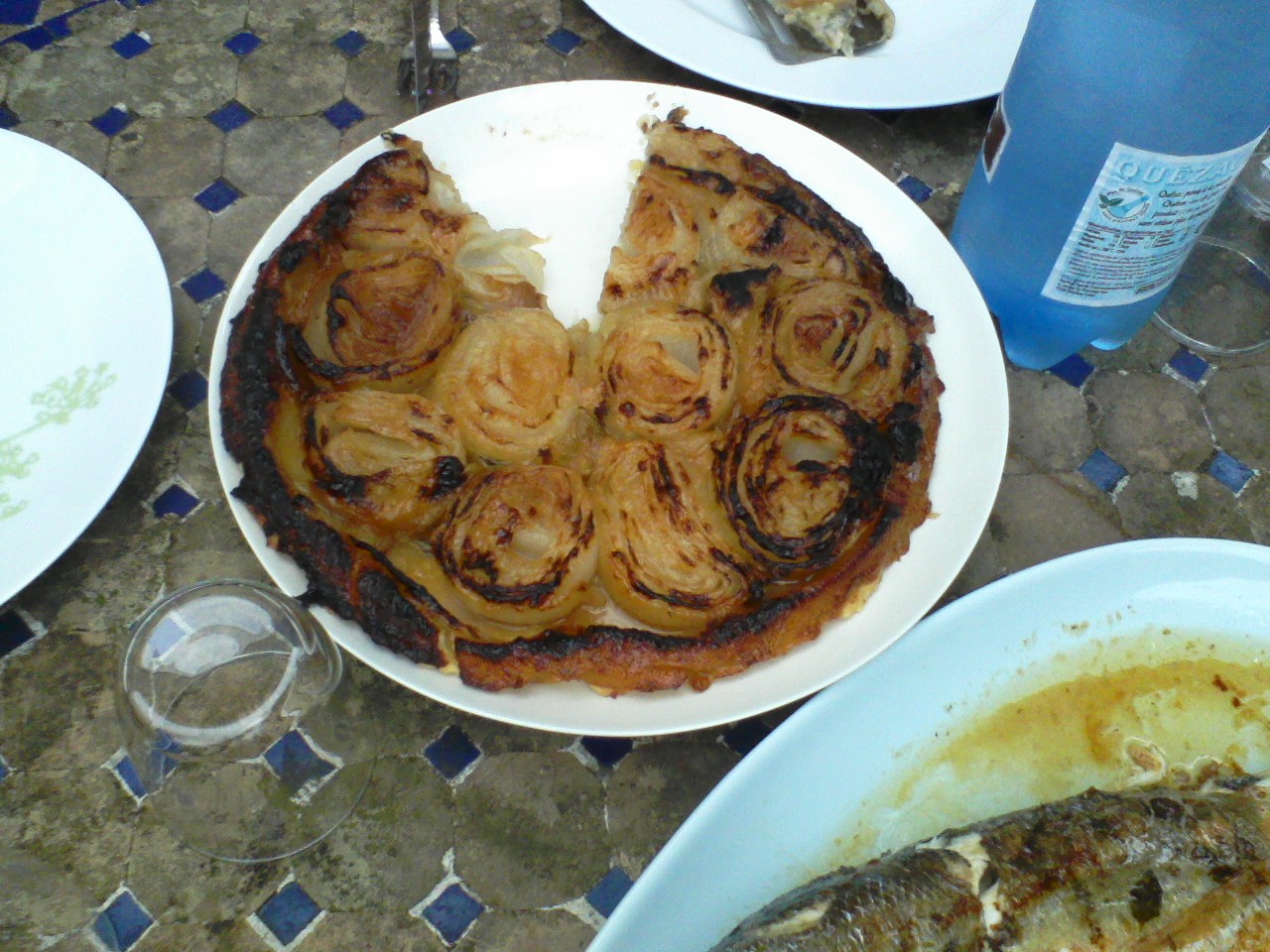
On the menu yesterday - just for the cameras, you understand, was rough duck terrine with pistachios, sea bass, prunes with guinea fowl, onion and blue cheese tart and wild strawberries with sheep's milk yoghurt (it's a subtly sweeter version with a slightly rougher texture - am I becoming a professional foodie or what..?) 
I am informed that the fowl - or indeed the fish, when wrapped in the peritoneum of a pig retains flavour and provides a natural environment for perfectly succulent cooking.
Furthermore, Mediterranean populations, who consume large amounts of monounsaturated fatty acids as well as omega-3, also fruits and vegetables have a lower cardiovascular risk than other European populations. How very encouraging.
Tomorrow, it's a winter menu. Lightly curried monkfish with winter vegetables and, because venison is out of season, we'll have to make do with ostrich en croute instead - for the colour, you understand. It's tough being a writer.

Wednesday, July 21, 2010

Huddling Penguins

As an expat, I sometimes ask myself why people go to church. They might just be looking for a community to belong to, like huddling penguins or perhaps it is because they are searching for resonances of home, English gardens in the rain and the familiarity of the Anglican liturgy. I don't look down on such an attitude, I just don't really understand it.  Yet, the ‘non-vagabonds’, in other words, people not like me for whom ‘home’ has a root and a landscape, some of them are doing, I suppose, what I and others used to do, exploring the cultural validity of the creation’s response to the Creator within the securer contexts of cultural familiarity – a reinvention of worship in a relevant context – an emergent church, a modern parousia, the God of the iPad.  So-called contemporary or emergent churches have seen visitor numbers rise threefold in the last ten years. They come perhaps because they feel that their lives really are reflected in the worship they see there. Church is no longer a remote, good-for-you pursuit in which in order to take part, you have to be educated in the long and arduous narratives of Western church history. It has exploded into a multicultural, multimedia spectacle in which worshippers have embraced all the technologies available, a natural successor to the culture of consumerist identity, specifically musical - Woodstock mature, if you will. The multivalency of media is mirrored by a multivalency of cultural rooting. There is no longer just one church history to be followed; the invitation is there to challenge and recontextualise the histories that we have accepted from the past. The Church is in a position to do something extraordinary to reflect the diversity of modern life. It can be a reinterpreter  of inherited histories and a producer of a new awareness, in which the validity of any one history is never put before the direct, one-to-one primal experience of a single worshipper in the face of a single act of worship in a single space - the rediscovery of awe and wonder, like one’s first visit to the Guggenheim, or Glyndebourne, or whatever floats the boat. The spectacular explosion of popularity for Hillsong United is one of many worldwide examples.
I still wonder where I belong.


Tuesday, July 20, 2010

Too Good to be...

Most of the time, I am OK about being a tourist. There's a lot to do and strangers are to be seen peering myopically at maps and street signs, orienting themselves appropriately. It does therefore come as a small jolt to one's pride, especially one as urbane and street-savvy as I should dearly like to be thought of, to be 'taken for a ride'.
I have to say, it was neat, however. A personable young woman approaches the mark in a crowded street, clutching what looks like a large gold ring in her hand. After a moment's recalibration, I realise that I am being asked if the ring she has allegedly found on the street at my feet belongs to me. I reply, with an insouciant smile, that it is not - figuring on the fly that the woman can then keep her prize, and by the look of her somewhat shabby and underfed frame, she could use a little good fortune. Surprisingly, she then presses the ring on me, telling me it does not fit her, but might fit me quite well,  not failing to point out how handsome it is and how there is a 'hallmark' proclaiming its authenticity as 18 carat gold. At this point, the first tendrils of doubt begin to cloud my reasoning along with what I can only describe as naked, undiluted and shameful greed. The woman suggested I might like to 'give her a little something - perhaps enough for a Coke or a cup of coffee.' With comprehensively asinine stupidity I pulled out my wallet to find a small bill. The ring looked and felt like gold; I gave the woman 5 euros - her face darkening - she was clearly expecting more, but, nameless suspicions aroused, I simply shrugged and walked away, feeling simultaneously smug and ill at ease. It was only after a minute inspection at a table in a cafe on rue Madeleine  including dropping the article on the ground that I realised that brass is less dense than gold and has a different timbre when dropped on to a hard surface. Onlookers presumably doubted my sanity. The scam is apparently widespread and is practised by Eastern European gipsies. Furthermore, I was incredibly lucky not to have my wallet filched by an accomplice during the conversation.
I rather thought my luck had turned, as it happened, since there was seemingly no queue to get into the Pompidou Centre, which still looks unfinished - I wanted to see the Brancusi exhibition. Like all other public museums, it's closed on Tuesdays. Ah. Oh, yes, and in case anybody was wondering, I was laughed at later without mercy, which did me good. Probably.

Monday, July 19, 2010

Calvados Country

When Normandy is mentioned, the English subside into glowering silence, since the pretensions of the short little man who established a beachhead near Hastings almost a thousand years ago still rankles, since he brought with him smelly cheese, better cider and men in pointy hats. We did, of course, bring it on ourselves since the match ain't over till the whistle blows and gazing up into a hail of Norman arrows isn't the brightest strategy for the King of England.
Nevertheless, these days, Sundays in Normandy are cultured, peaceful affairs. The Honfleurais are proud of their ancient harbour from which goods were transported from Rouen to England to satisfy the bestial appetites of the fascist rapacious invaders. 
A decent fish lunch at a Michelin-rated restaurant - quite a departure for a meat and potatoes man -  then the exodus from Deauville (so chic) after an invigorating paddle on the world - class beach to the autoroute, avoiding the vacation stampede via quaint little towns with seventeenth century architecture and almost as many canals as Venice. Most satisfactory. The soundtrack is, of course, from TaizĂ© and I can't remember why the pigeon breasts stuffed with foie gras got into the video. Senior moment. Never mind.