Tuesday, April 02, 2013

Far Away

Shanghai in the mist
A month is a long time in the blogosphere. The world rolls forward, news happens, fades and is replaced, screaming headlines washed away in diffuse watercolour ripples of words and opinions. I've been away, as most people who know me will be aware. There's something self-indulgent, even tasteless, about writing a travelogue, since it proclaims to whatever friends you might have left  that you've 'been somewhere' and they haven't which drives people into paroxysmal envy or downright disgust at your narcissistic insecurities which suppose that anybody might be remotely interested. Travelling is disturbingly unpredictable and anxieties rise simply because they do things differently in foreign parts. Returning to France is an like an anchor, where the familiar sits comfortably, like a good sofa where I get to sit and think. People groups carry their own unique cultural stamp and it is all too easy to form opinions which can develop into a form of xenophobia, almost racism, just because the unfamiliar is not like we do things at home. There is a large part of me that is a diarist, chronicling events precisely and sequentially but if I did I would find myself missing the significance of the random. Our thoughts do not fall neatly into well-ordered piles, so much of what follows is unapologetically tapestried.
All-pervasive
The Chinese were literate, numerate, architecturally and scientifically sophisticated when  Saxon tribes were slaughtering each other in battles of attrition. They spit loudly and frequently from the windows of their cars and in the streets, preceded by gravelly hawking, grating against the more restrained European sense of propriety, perhaps in response to a society governed by a secretive, shadowy elite without whose patronage and influence nothing gets done and because of it the workers are kept in their place. Chinese society has, decades afterward, still not recovered from the staggering waste of human resources after the Cultural Revolution. The homes of the bourgeoisie were pillaged and vandalised - even toilet seats and bookcases were removed and hurled into the streets  - and people were sent in their millions for re-education in the country, a process which consisted of mindless manual labour and relentless, repetitive exposure to the Thoughts of Chairman Mao, who is still regarded as an almost godlike figure. His statues are still to be found in Shanghai flea markets - his podgy little hand outstretched. He has earned the dubious reputation of presiding over the greatest social disaster of the twentieth century - Stalin killed his millions, Mao his tens of millions - the lowest common denominator established was at the time considered the only panacea for starvation and wretchedness,leaving behind a people who obey instinctively and 'follow the panda' in well-organised, manageable groups. And yet, it's interesting to detect,underneath the veneer of conformity that is so characteristic of Chinese society, a smouldering, almost palpable resentment, a sense of internal dislocation from the groups in which they are forced to participate. 
There is a sense in which China is at a point of inflection - the middle classes, vibrant, wilful and more outspoken than formerly, growl mutinously under the sternness of their rulers, corruption is on an epic scale and environmental degradation is horrendous - small children wear 'Hello Kitty' facemasks routinely. The collective, nevertheless, is still the primary social lever - in aeroplanes people chatter loudly like starlings, oblivious to the discomfort felt by individuals - after all, what do they matter anyway? Yet, for them, such behaviour is normal in its indifference. They push against one, the envelope of personal space is different. Their hospitality is, however, generous to the point of embarrassment - we were invited to a private dinner party in Shanghai by a well-known artist and the dishes just kept coming.
By contrast, Australians are characteristically brash, mostly. Signs on bars proclaim ‘we’re open till we’re shut’. Sydney isan easy, relaxed town where the second and third generation of risk-takers from Europe have carved out a life for themselves in the rough sandstone of the bush with initiative, ability and flair. Singaporeans are tight, disciplined and impossibly clean, even by my standards. They wait patiently at the ‘don’t walk’signs, without a vehicle in sight. Small boys attend taekwondo classes accompanied by their nannies, walking through districts named and organised by decades of British influence, or, perhaps imperialism. Hong Kong is exciting,rich and brassy; China meets Park Avenue with more Bentleys per square kilometer than anywhere else on the planet. 
Normally, I like to post pictures, but on this occasion I won't; instead posting them all at a later date. The ones I have are a metaphor for how I felt at the time. But, more of this later.


Friday, March 01, 2013

Anchors and Peace

Anchor, fish and Chi-Rho symbols, catacombs of St Sebastian
I don't normally have much of an attention span for video debates on the Internet, in fact, I'd go so far as to say that I don't so much surf, but pond-skate over such things. Nonetheless, I did find myself waiting with mild expectancy for YouTube to laboriously reassemble itself and watched the late and sometimes unlamented Christopher Hitchen debating with  Tariq Ramadan - the grandson of the founder of the Muslim Brotherhood - on the subject of 'Is Islam a Religion of Peace' last night. If Islam is to have a Reformation - which its recent history might render doubtful - Professor Ramadan might be the new Luther or Zwingli, whose only previous claim to fame was his being the final entry in the Zurich telephone directory. 'Why is he making silly jokes about serious matters?'; I hear the snorts of disapproval. Because it's about time somebody injected a little Aristotelian humour, that's why. Also, because this is my blog and I can write what I like.
Had one been living in the mid-sixteenth century when Bloody Mary was on the throne, we would have had to have taken sides in much the same way as we do now. Mary apparently didn't just give her name to a spicy, vodka based cocktail but rather enjoyed watching heretics burn, asserting that it sharpened her appetite, much like the satisfaction Ayatollah Khameini might gain from hearing the news that somebody had finally taken him seriously and beheaded Salman Rushdie for making reference to dubious verses in the Qu'ran alleging that the founder of Islam might have been tempted by an attack of polytheistic fervour.
I found myself reviewing the bloody histories of domination and slaughter that have characterised the adoption of dogma since people first thought that it might be a good idea to worship the Moon. One overarching theme is reprised endlessly, that the prevailing realpolitik demands adherence and loyalty, both of which are satisfied by religious affiliation. I've never really liked the word 'religion' much. It suggests organisation, partisanship and the general notion that if you want to belong to the club, a few trifling personal prejudices, like not believing that wine turns into blood and small wafers metamorphose into corporeal flesh, have to be set aside.
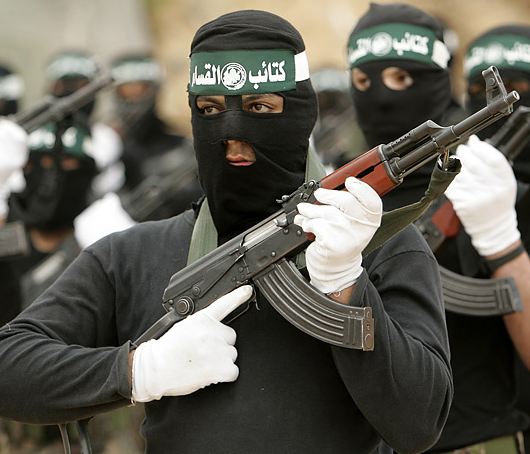
The debate was, unusually, quite good-tempered, Hitchens having perhaps promised himself that he wouldn't use sarcasm, wit and plain ridicule to demolish what would seem to be a very obvious conclusion. Neither did he allow himself to deviate from the central theme - tempting as it might have been to assert with considerable justification that in matters of faith and dogma, most disagreements end up if not with tears before bedtime, more usually massive and senseless slaughter, a principle which, over a broad historical sweep, applies just as well to the behaviour of Hamas and the Holy Roman Church.
If a 'religion' fails to reinvent itself periodically it ossifies and loses touch with the cultural realities into which the march of history inevitably thrusts it. Yes, Islam needs a Reformation, as deep and far-reaching as Europe experienced five centuries ago. After the inevitable blood-letting, it may yet emerge as tolerant, forgiving and merciful as the Allah it worships. Until that time, wars and rumours of wars will continue without much reference to justice and truth.
Under the Eternal City, Rome, the catacombs were hiding places for Christians, and also burial chambers. The anchor is a symbol often found scratched on the ancient stones - both as a disguised cross and a reference to Christ being the anchor of the soul and the promise of eternal life. Some ideas stand the test of time.

Tuesday, February 26, 2013

No Compromise 2: The Enemy Within


The Muslim Brotherhood refers to Israel as 'this criminal enemy'. Surrounded as they are by systems plotting their annihilation, it has been widely reported that the Israelis, some say true to form, recently tortured a Palestinian prisoner to death – according to a PA autopsy report. The Israelis are currently saying he died of a heart attack; meanwhile secular Jewish anti-establishment media are coming up with all kinds of fanciful tales such as Shin Bet killed him and made it look enough like a beating up so they could respond in force to the inevitable intifada which would follow - pleading poor Zionist victims as the US President arrived. What absolute nonsense. Another theory is that he was beaten by fellow Arab prisoners, which has historical precedent and may be some way toward the truth. President Obama had better be wearing his luckiest diplomatic socks for his much heralded arrival in Jerusalem in a month's time. I suspect he privately supports the Israeli secular Left, heedless of the fact that in terms of action on the ground they themselves are the enemy within. I further wonder if he's worked out that Arabs see pussyfooting and conciliation as a sign of weakness and the international community as well as the PA will be up in arms at the slightest suggestion that he is going to offer any moral support to the Zionist entity which will be hosting him. Additionally, the featherweight touch that his administration has so far used when dealing with the Brotherhood and most of the rest of them is quite simply both ineffective and inappropriate since it has given political cover to authoritarian regimes perhaps worse than the one they helped to depose, allowing mechanisms for repression to develop and strangle any attempt to birth viable and self-sustaining democracies.
As a postscript, it will be interesting to see if a visit to the Al Aqsa mosque is on his itinerary.

No Compromise 1: The Enemy Without

Hamas rules in Gaza. The PA rules in the West Bank. Both have the same ideological agenda but neither have the political finesse of The Muslim Brotherhood. When Hillary Rodham Clinton visited Cairo in April 2011, to show solidarity for what appeared at the time to be a fledgling democracy, or, better, to keep an American foot in the door, there was no MB in power, no anti-Morsi riots in Tahrir Square. All that came later. The MB  does a lot for the poor. It provides a degree of law and order. It also understands that Islamic power can only be consolidated by repression.  According to its founder, Hussain al-Banna, “It is the nature of Islam to dominate, not to be dominated, to impose its law on all nations and to extend its power to the entire planet.”  Therefore, the Muslim Brotherhood opposes secular tendencies of Islamic nations and wants a return to the precepts of the Qu’ran. The Brotherhood firmly rejects all notions of Western influences, but seems quite happy to take Western money in the interests of furtherance of its own agenda. In the post Arab spring, particularly in Egypt, however, it doesn’t just need a coat of ideological paint to spruce up its image in the West and it doesn’t just need a new governing strategy. It needs to understand that its version of political Islam — which is resistant to women’s empowerment and religious and political pluralism — might be sustainable if you are Kuwait or Saudi Arabia, and you have huge reserves of oil to buy economic growth and give all the credit to Islam but if,  as in Egypt, for example,  your only natural resource is your people — men and women — you need to be as open to the world and modernity as possible to unleash all of their potential. At this time, the MB won't play this game and are playing true to form by attempting to consolidate power by all means, which in translation means the use of overwhelming  force.
"According to the Kuwaiti daily Al-Qabas, the head of the al-Quds Force, the elite force of the Revolutionary Guards of Iran, visited Egypt secretly some weeks ago. He had apparently been invited to demonstrate how to set up a special, elite unit - distinct from the army - faithful to President Morsi's regime. There have been reports in recent months that the MB was forming a special militia to protect the regime and tackle its opponents and that it was already operational. Reports in a number of Egyptian opposition media outlets claim that Hamas dispatched 7,000 militiamen from Gaza to Egypt to protect President Morsi. The Gulf newspaper Akhbar Al-Khaleej published what it described as "secret documents" proving that Hamas, with the financial backing of Qatar, had plans to send hundreds of militiamen to Egypt to help Morsi's regime."
Bottom line then looks like this.  Either the Muslim Brotherhood changes or it fails as a reasoned, sincere player in the region, going the way of all the rest of the ideologues — and the sooner it realises that the better. But the message is not being delivered forcefully enough. On the one hand, while the ‘Freedom and Justice’ party members – the political wing of the MB - can say publicly as recently as last month that Egypt’s Muslim Brotherhood will not recognise Israel “under any circumstance” without anyone bothering to ask whether negotiation is a possible strategy, any ‘talk’ is so much hot air. Such firebrand rhetoric is widely applauded in Jordan, Lebanon and Syria – and probably London as well. When asked whether it is a requirement for the government in Egypt to recognise Israel, the response was uncompromising: “This is not an option, whatever the circumstances, we do not recognise Israel at all. It’s an occupying criminal enemy.”  The interviewee further stressed that no Muslim Brotherhood members would ever meet with Israelis for negotiations. “I will not allow myself to sit down with criminals” was the flat response. One of the spiritual leaders in Egypt - Yusuf Al Qaradawi, who can muster media audiences in the millions, is a supporter and advocate of violence against Israel and a strong proponent of the belief that the Holocaust was a punishment upon the Jews for their corrupt practices.  How will Obama respond to that next month in Jerusalem?


Saturday, February 23, 2013

Prisoners and Drink


In recent times, I’ve had occasion to spend time with people who drink – sometimes quite heavily  - and also people who gave up for an extended period before returning to their old drinking habits. It does people like me no harm to watch others' lives imperceptibly unravelling until they reach a place where the social stitching has disintegrated so badly that they no longer function properly. As an exercise in self-therapy, then, I found myself considering a few ideas that I hadn’t pursued for quite some time. Drinking is a game one plays with oneself, so a degree of understanding can be gained from a look at the mathematical theory of games. The ‘Prisoner’s Dilemma’ is, I think, the first example of co-operative game theory. Two men are arrested, but the police do not have enough information for a conviction. The police separate the two men, and offer both the same deal: if one testifies against his partner (defects/betrays), and the other remains silent (cooperates with/assists his partner), the betrayer goes free and the one that remains silent gets a one-year sentence. If both remain silent, both are sentenced to only one month in jail on a minor charge. If each 'rats out' the other, each receives a three-month sentence. Each prisoner must choose either to betray or remain silent; the decision of each is kept secret from his partner. What should they do? If it is assumed that each player is only concerned with lessening his own time in jail, the game becomes a non-zero sum game where the two players may either assist or betray the other. The sole concern of the prisoners seems to be increasing his own reward. The interesting symmetry of this problem is that the optimal decision for each is to betray the other, even though they would be better off if they both cooperated.
The normal game is shown below:

Prisoner B stays silent (cooperates)
Prisoner B betrays (defects)
Prisoner A stays silent (cooperates)
Each serves 1 month
Prisoner A: 12 months
Prisoner B: goes free
Prisoner A betrays (defects)
Prisoner B: 12 months
Prisoner A: goes free
Each serves 3 months
Here, regardless of what the other decides, each prisoner gets a higher pay-off by betraying the other. For example, Prisoner A can (according to the payoffs above) state that no matter what prisoner B chooses, prisoner A is better off 'ratting him out' (defecting) than staying silent (cooperating). As a result, based on the payoffs above, prisoner A should logically betray him. The game is symmetric, so Prisoner B should act the same way. Since both rationally decide to defect, each receives a lower reward than if both were to stay quiet. Traditional game theory results in both players being worse off than if each chose to lessen the sentence of his accomplice at the cost of spending more time in jail himself.
The structure of the traditional Prisoners’ Dilemma can be analysed by removing its original prisoner setting. Suppose that the two players are represented by colours, red and blue, and that each player chooses to either "Cooperate" or "Defect".
If both players play "Cooperate" they both get the payoff A. If Blue plays "Defect" while Red plays "Cooperate" then Blue gets B while Red gets C. Symmetrically, if Blue plays "Cooperate" while Red plays "Defect" then Blue gets payoff C while Red gets payoff B. If both players play "Defect" they both get the payoff D.
In terms of general point values:
Canonical PD payoff matrix

Cooperate
Defect
Cooperate
AA
CB
Defect
BC
DD
To be a prisoner's dilemma, the following must be true:
B > A > D > C
The fact that A>D implies that the "Both Cooperate" outcome is better than the "Both Defect" outcome, while B>A and D>C imply that "Defect" is the dominant strategy for both agents.
If two players play prisoners' dilemma more than once in succession and they remember previous actions of their opponent and change their strategy accordingly, the game is called iterated prisoners' dilemma.  But, enough of all this. Addiction can be seen as a game and can be cast as an intertemporal psychodynamic (PD)  problem between the present and future selves of the addict. In this case, defecting means relapsing, and it is easy to see that not defecting both today and in the future is by far the best outcome, and that defecting both today and in the future is the worst outcome. The case where one abstains today but relapses in the future is clearly a bad outcome - in some sense the discipline and self-sacrifice involved in abstaining today have been "wasted" because the future relapse means that the addict is right back where he started and will have to start over (which is quite demoralising, and makes starting over more difficult). The final case, where one engages in the addictive behaviour today while abstaining "tomorrow" will be familiar to anyone who has struggled with an addiction. The problem here is that (as in other PDs) there is an obvious benefit to defecting "today", but tomorrow one will face the same PD, and the same obvious benefit will be present then, ultimately leading to an endless string of defections. One trick – or ’learned behaviour’ as my psych friends would put it, is to make a rule never to defect today – it can always be postponed until tomorrow. And, tomorrow never comes.

Love and Justice


"Do you hear the people sing, singing the song of angry men. It is the music of a people who will not be slaves again".  If you'd like to see the clip, it's here. The positive vibe is by no means unanimous for the stellar film version of Victor Hugo’s iconic, sweeping novel about love, justice, revolution, revenge and forgiveness.
My father won a green, leather bound copy of "Les Misérables" as a school prize which stayed unread in his library until I discovered it in my early teens. The relentless, descriptive prose of the horrors and degradation of early nineteenth century Paris was endlessly fascinating, populated by gritty opportunists, grimily sore-encrusted, their hopeless eyes casting about in order to scratch a living from the hard, pitiless streets, contrasting with the young, bright-eyed idealists, ready to spill their blood on the barricades in the cause of revolution, captivated me for hours, curled up on a sofa. Hugo himself, a committed Republican, was a witness to the events of the July Rebellion of 1832, the last Republican stand in France's bloodstained revolutionary history, when students and radicals erected street barricades and exchanged gunfire with Government troops. Half of Paris had fallen to the mob and was completely cut off; Les Halles was briefly barricaded and impassable. It was interesting to notice echoes of the modern city appearing from time to time, as if by accident, and the final scene was clearly a reconstruction of the site now occupied by the vast and expanding shopping mall of Les Halles which , one day soon, might actually be finished.
Hugh Jackman can sing, for sure, but the A list cast members were selected mostly for their box-office draw, not because they could necessarily hold a tune, so some might suggest that it is singing for its Oscar supper, at which table it will assuredly get a seat or two. Claude-Michel Schönberg's score is not easy to sing well - especially live – there was a gritty, down-to-earth feel to the sung dialogue, which held up well with ambitious staging and effects. Russell Crowe was, unfortunately, miscast and wasn’t really able to drive his character forward since he was outclassed musically.  As the stoic, almost obsessive Javert, he did everyone a favour at the end by jumping off a bridge, but of all the well-known names, he didn’t really have the gravitas to carry off Jean Valjean’s relentless and pitiless pursuer. Some beautifully deft surprises – Cosette and  Marius provided some rare, tender moments - and Éponine as the sad, forgotten heroine transferred well from the stage, yet maintains her early beauty, unlike Hugo's description of her later. He describes her descent from a privileged childhood into " a pale, puny, meagre creature", with a hoarse voice like "a drunken galley slave's", having been "roughened by brandy and by liquors". She wears dirty and tattered clothing, consisting solely of a chemise and a skirt. She is missing a few teeth, is barefoot, has tangled hair, bony shoulders, heavy brooding drooping eyes, and a prematurely-aged face with only a trace of beauty lingering. She had “the form of an unripe young girl and the look of a corrupted old woman; fifty years joined with fifteen.”
Lovers of literature have already weaved their own imaginary tapestries - there is, after all, more than sufficient material - but lovers of musicals might not enjoy this; the hybridization of the musical stage and big screen action might send them screaming from the theatre, but if all they want is the singing they can go buy a different album. I saw an early showing on the Champs-Élysées in the company of four others in the theatre - the French are less than enamoured with revisionist historians and dislike their literary heroes being adulterated with crass commercialism - to escape from a punishingly freezing day and, shamelessly exploitative British weepie as it undoubtedly was, I loved it.


Saturday, February 16, 2013

Cosmic Crossfire

Dawn  over Chelyabinsk, 15 February 2013
An asteroid the size of a city block passed inside the geosynchronous satellite orbit the other day, suffering significant gravitational deflection.
The almost simultaneous - and unexpected - arrival of a much smaller piece of space debris - a trifling seventeen metres across - would therefore have given no particular cause for concern except that this ten ton pebble scored a direct hit, and almost touched down. The big one which missed flew in from the south, the much smaller object came in at dawn from the east. Travelling at 64,000km/h, it punched through the atmosphere then fireballed across the Urals, giving the citizenry of Chelyabinsk a day to remember, with over a thousand casualties and buildings damaged by the thermal shockwave of the object breaking up and being virtually incinerated by the security blanket of the atmosphere. This was the largest impact in over a century, twenty times the impact power of Hiroshima. The much larger so-called Tunguska event in 1908 flattened vast tracts of Siberian wilderness and nobody important went to have a look until ten years later.
Such events always give me the what-ifs. These events are not uncommon. What if our ancestors, looking into night skies untroubled by light pollution, once in a while, saw a fireball falling to earth. It would have sent them fleeing, terror-stricken, to the shelter of their caves. Perhaps they believed that they had inadvertently angered a malevolent and vengeful deity who was announcing his intention for retribution. What if the meteors had been reversed and the bigger one had struck? In all probability, the damage would not have come close to what Hollywood describes as an 'extinction event'. Yet, we are at the mercy of random gravitational deflections and with all the statistical posturing and estimates of damage limitation, we are as ill-prepared psychologically now as we were during the Stone Age. Understanding the reasons for our destruction avails us little in the face of its reality. In the movie 'Deep Impact' which describes the possibility of such a scenario, I have often reflected on how people's behaviour might change in the face of certain annihilation. On the one hand, there would be the rapists, looters and pillagers, all moral restraint swept aside. On the other, there would be those who are able to reach inside of themselves for their personal Zen, perhaps experiencing almost mystic, revelatory clarity, as Ludwig Wittgenstein apparently did, sitting in the middle of a First World War battlefield, shells raining down, writing his ideas in a notebook.
 'Deep Impact' 1998. Hope survives.
There are over nine thousand known candidates for near-earth impact. One day, we or our descendants might not escape. But, perhaps, not today. Our species likes the idea of continuity, and the thought of its disruption by an inconsiderate visitation from a stray cosmic pebble or the Angel of Death is uncomfortable.