Tuesday, September 26, 2006

Desert, mostly


Kuwait. A long, thin drinkawater of a country, approximately one-third the size of Wales. Most of the inhabitants are coastal, and Kuwait City to the Saudi border is one long suburban sprawl. A car seems to be essential, preferably huge, 4WD with a highly efficient air conditioner, but in the interim, taxis will have to do. The bus service is cheaper, but less regular. The 120kph freeway limit is, remarkably, adhered to with some rigour, most cars and all the taxis having audible speed limiters. This of course is the Holy Month of Ramadan, let joy be unconfined. I though a colleague was joking when she told me that the police will arrest anyone caught smoking in public, apparently not. Spending the rest of Ramadan in a Kuwaiti jail isn't tempting, thus I have to be more self-controlled than usual, which is hard for me.
The Month of Ramadan is also when it is believed the Holy Quran "was sent down from heaven, a guidance unto men, a declaration of direction, and a means of Salvation". Excellent.
Ramadan is a time when Muslims are supposed to concentrate on their faith and spend less time on the concerns of their everyday lives. It is a time of worship and contemplation, or so I am told...
One is not allowed to eat or drink during the daylight hours. Smoking and sexual relations are also forbidden during fasting. At the end of the day the fast is broken with prayer and a meal called the iftar. In the evening following the iftar it is customary for Muslims to go out visiting family and friends, which is why you can never get a parking space in the mall. According to the Quran:
One may eat and drink at any time during the night "until you can plainly distinguish a white thread from a black thread by the daylight: then keep the fast until night"
The good that is acquired through the fast can be destroyed by five things -
the telling of a lie
slander
denouncing someone behind his back
a false oath
greed or covetousness

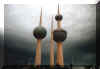
All very fine. Doesn't help that everyone's blood sugar is lowered thus bad temper is commonplace., so roll on 24th October, and Eid. The towers in the image are quite spectacular when seen close up..

Saturday, July 22, 2006

Komboloi

The next few days are likely to be interesting. Work, like Bunyan's puddles, has dried up, thus I am once again casting what little bread I have upon rapidly shrinking wetland.
Philippians 4:19 notwithstanding, one is sometimes tempted to ask the question 'how?' And yet, so many times, usually at the last moment (please someone buy the guy a watch) the remarkable fact remains that as a believer, I am able to wait in confidence simply because God is committed to providing.
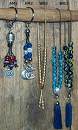
It has been said that worry is a form of atheism, saying, "It all depends on me." Worry is a warning light that we doubt the love of God. Put more properly, we doubt the unconditional love of God. H'm. The image is of Greek worry beads (Komboloi) but the idea originated thousands of years ago in the prayer beads of many cultures and traditions...Hindu, Christian and Moslem. Today they are used for their comforting effect....helping smokers to quit, the anxious to breathe more deeply, the very pregnant to be patient...and people like me, I suppose.
Perhaps I should get some, counting being soothing, whether hours, days or beads.

Tuesday, June 06, 2006

Letters from School Revisited

Amazing, the power of youth to interest, elevate, amuse and otherwise brighten one's day. I am sitting in an English class, top set, usually taught by the Head of English, a woman whom the French might call 'formidable'. I have met one or two of them before, and by-and-large, as the Hitch-Hiker's Guide profoundly remarks, are 'mostly harmless'. One of them, when asked his name, replied 'Vladimir Putin', which I thought enterprising.
A gaggle of girls is 'working together'. This in reality means extensive magpie chatter, interspersed with a furtive look in my direction to see if I am paying attention. A few, a very few, are taking the task seriously, and have produced reams, emailspeak and creative spelling notwithstanding. The fashion for alternative and temporary tattooing is highly developed here and red hieroglyph is evident on a few female forearms. Some boys are stretching the bounds of my patience. This I think is the perfectly legitimate, albeit irritating habit of the young bullocks pushing against the fence. Sometimes, I wish it were electrified.

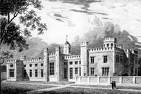
I realised last Friday why I could never teach in the UK again. Having been sent to a 'challenging' school, a euphemism for behaviour so ungovernable that one is torn between zookeeping and babyminding, in an area whose remote claim to notoriety is the high percentage of incestuous relationships in the peninsula. Within a few minutes, it rapidly became clear that shouting and imprecation only amused the population, neither intimidating them nor creating an environment where fragments of knowledge might be acquired. I therefore remained Stoic, my wa undented, allowing the mayhem to subside to an unchallenging murmur. Lao-Tzu would have been proud, in a similar way that, as in the Christian monasteries, a code of order and internal discipline is maintained regardless of external circumstances. Taoist quietism is an attitude imposed by social circumstances, by the Movement of Heaven, and remains for each to appreciate when it is the time to "withdraw" or to "advance". Strategic withdrawal seemed appropriate. The image is of my old school, and at the time when the lithograph was first created, floggings were commonplace and detentions involved copying Georgics out. Sic transit..

Tuesday, May 16, 2006

Flower of Scotland

One's friends do lead interesting lives. An impending wedding in a Scottish castle for a friend's sister is awaited with childish clapping of hands, the thought of skirted-beclad, champagne-swilling English disporting themselves on rain-sodden hillsides, nostalgically recalling 'prima nocte' has a certain colonial feel about it. It should, of course, be remembered that while the toffs on horses were murmuring 'tally ho' on the sidelines; in front of the guns it was the bampots in bagpipes and kilts in there doing the bayoneting and spilling foreign guts on alien fields for the glory of the Empire. Additionally, the Scottish preoccupation with engineering of real gravitas rewarded the world with properly surfaced roads, battleships of behemoth proportions and the steam engine. Oh, yes, and they inventit the tellie..

Thursday, May 04, 2006

Blarney, or what you will

It's alarming to reflect on the fact that the veneer of urbane sophistication is frequently tissue-thin to the point of transparency. Had a phone call from a friend who probably knew me better than anyone else in the world with an offer to visit southwest Ireland over the summer, which caused a metaphorically gleeful clapping of the hands. In my precarious condition, such offers are not just rare but their serendipitous value is priceless.
Mark Twain once wrote: 'I have seen all the foreign countries I want to except heaven and hell and I have only a vague curiosity about one of those.'
Ireland clearly wasn't on his list. The sheer joie de vivre of its citizenry, together with some of the greatest authors and poets this part of the planet has ever seen, also the strong possibility of myself having Irish antecedents, have persuaded me to overlook an unwholesomely damp climate. I imagine my ancestors, gritty Celts all, bestriding the hills with the braggadocio of a proud, unconquered race. Well, not since 1690, at any rate. This homespun image of a Bantry village dwelling gives little indication that the Atlantic water lapping its borders is probably freezing. Never mind. I must take care not to fall in.

Wednesday, May 03, 2006

Book Review

And, for this week's special intellectual treat, at a bargain price from a bookshop in Gosport......'Revelations'.
Imagine thirty three essays on individual books of the Bible, written by secular, big-name authors, from A N Wilson to Nick Cave. The illustrious pour their offerings into its pages. Bright-eyed skepticism shines through their craft. Is this such a bad thing, I wonder? At first reading , a god who orders the genocide of the Amalekites, the slaying of Isaac and much else besides would seem to be despotic at best and psychotic at worst. Yet, it depends how the narrative speaks to us. The KJV is deliberately flowery and ambiguous since it attempts to convey myth and grandeur in a form which will be remembered when more modern and prosaic translations have disappeared. Evangelicals assert often noisy ownership of perceived facts when perhaps the message of myth (Gk muthoi: [Homer] meaning 'powerful and authoritative stories') isn't to propagate an untruth or a fairytale, it's simply there to shed a different light on things. Simply put, I think we're supposed to read between the lines a bit.
John's gospel speaks of the time when the apostle Thomas re-enters the post-resurrection story and still refuses to believe that Jesus truly has risen. Thomas had to feel for himself Jesus' wounds or else he could not believe. Even though Jesus apparently had miraculously entered into the room while the door was locked, Jesus still saw fit to allow Thomas to examine his body, providing Thomas with the proof he needed. Jesus' response was, "do not doubt, but believe." I think Thomas is an archetype of humanity, us, in other words. We all have the capacity to doubt. In many ways, doubting and investigation are survival mechanisms, and if we did not doubt, our species wouldn't have lasted very long. If we didn't base our sense of reality on empirical evidence, we would believe just about everything we were told. We might believe that trolls inhabit Antarctica, or that cats talk outside No 4 Privet Drive. Thomas's doubt is ours, too, our nemesis and companion, our secret haunting. I think that doubt is not necessarily a lack of faith but rather an expression of it. Sometimes to doubt is merely to insist that God be taken seriously, not frivolously—to insist that our faith is placed in and upheld by something other than apparent conjuring tricks.
Image:Caravaggio. Doubting Thomas. 1602-1603. Oil on canvas. Sanssouci, Potsdam, Germany.

Sunday, April 30, 2006

Sunday meanderings.

It seems a characteristic of some Anglo-Catholic priests that they feel the need to flay their congregations alive, perhaps for 'sins of omission' concerning the use of appropriate prayers and meditations for the day, or their disinclination to turn up for Mass. You can't really blame them, can you. The priesthood might do well to remember that every time "hamartia" (= "sin") is used in Luke's gospel, it is with "apheimi" (= "forgiveness").
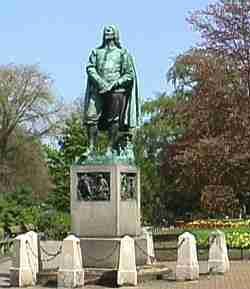
My own views on such silly nonsense are well known to those who are misguided enough to allow me room to express them . I don't think I could have gone as far as John Bunyan, born an itinerant tinker, whose statue stands proudly in Bedford and who spent twelve years in Bedford jail for his outspokenness. Apart from early propensities to command puddles to 'be ye dry', subsequently he wrote in scathing terms against the liturgy of the Church of England. No two things, according to him, had less affinity than the form of prayer and the spirit of prayer. Those who have most of the spirit of prayer are all to be found in jail, and those who have most zeal for the form of prayer are all to be found at the alehouse. H'm.